"AI is going to break the grid" is everywhere right now. The International Energy Agency (IEA) has the most cited numbers on this, so here's what they say, without the hype.
The headline numbers
From the IEA's Key Questions on Energy and AI, published Apr 16, 2026:
| Figure | |
|---|---|
| Data centre electricity use, 2025 | ~485 TWh |
| Growth in 2025 | +17% |
| Growth for AI-focused data centres, 2025 | +50% |
| Central projection for 2030 | ~950 TWh, around 3% of global electricity demand |
| AI-focused data centres, 2025 to 2030 | roughly triple |
For scale, the IEA's 2025 report put 2024 data centre use at 415 TWh, or about 1.5% of the world's electricity. It said the 2030 level would be slightly more than Japan's total electricity use today.
Per query, AI is getting much cheaper
This is the part that rarely makes the headline. The IEA says energy use per AI task has dropped by at least an order of magnitude a year recently. A simple text query now typically uses less electricity than running a TV for the same amount of time.
So why is total demand rising? Because usage and the type of work are changing. The IEA says video generation, reasoning and agentic tasks can use hundreds or thousands of times more energy per query than simple text generation. If you build agents that loop for minutes, you're on the expensive end of that range. (Our guide to running coding agents safely is about permissions, but it's the same kind of long-running work.)
Where the grid actually pinches
The bottlenecks are physical, not just about electricity in general:
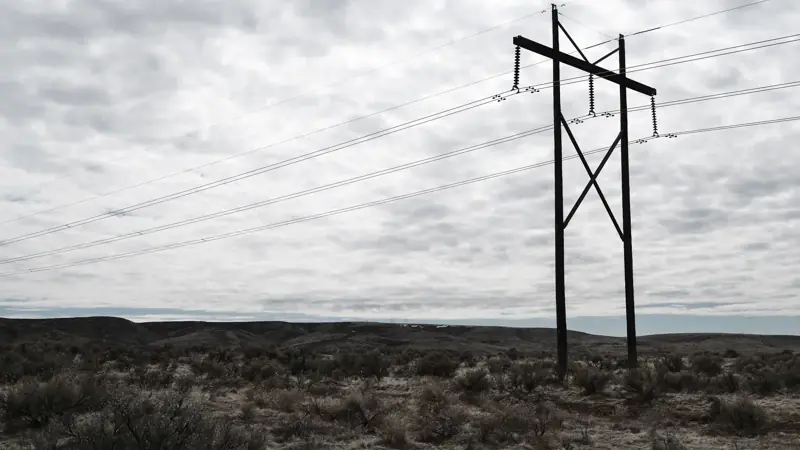
- Grid connections and equipment. The 2026 report says supply chains for gas turbines, transformers, advanced chips and IT parts have tightened. In its press release, the IEA says project pipelines are straining planning systems and holding up grid connections.
- Delays. The 2025 report estimated that, unless those risks are addressed, around 20% of planned data centre projects could be delayed. It said new transmission lines can take four to eight years in advanced economies.
- Concentration. Data centres cluster. The 2025 report said nearly half of US data centre capacity sits in five regional clusters, which is why local grids feel it far more than the global share suggests.
- Rack density. By 2027, a single advanced server rack could have peak demand equal to 65 households, per the 2026 report. AI server power density rose 11x between 2020 and 2025.
Workarounds operators are using
- Onsite gas. In the US, developers are pushing projects with onsite gas generation. The IEA estimates around 15–27 GW of onsite gas may power data centres by 2030, and says reliable onsite supply needs 30–70% overbuild relative to demand.
- Batteries. About 20–25 GW of battery storage could be installed in data centres globally by 2030, which could make them a grid asset if the incentives line up.
What the IEA does not say
It doesn't say AI is the biggest driver of new electricity demand worldwide. In 2025 it said data centres are about one-tenth of global demand growth to 2030, behind industrial motors, air conditioning and EVs. In advanced economies, though, where demand had been flat for decades, data centres are more than 20% of growth.
Why builders should care
Power is now part of the cost of compute. It shows up in GPU rental prices, in the memory shortage the IEA also flags (it says the HBM shortage should last through at least the end of 2027), and in how fast new capacity like NVIDIA's DSX POD can actually switch on.